Every session scored on published research, before you train it
Each session is scored for everything it trains, not just what it is called, and for the fatigue it leaves. The scoring model weighs many variables at once. For each set: the exercise, the load, the reps, how close to failure you went and the rest. For each muscle: the helpers as well as the main mover. For each main lift: the lifts that build it. For conditioning: what carries over to other kinds. And the fatigue from earlier in the session, the day and the week. The sources are listed on the methodology page.
Everything here is on every plan: Premium, Pro and Coach.
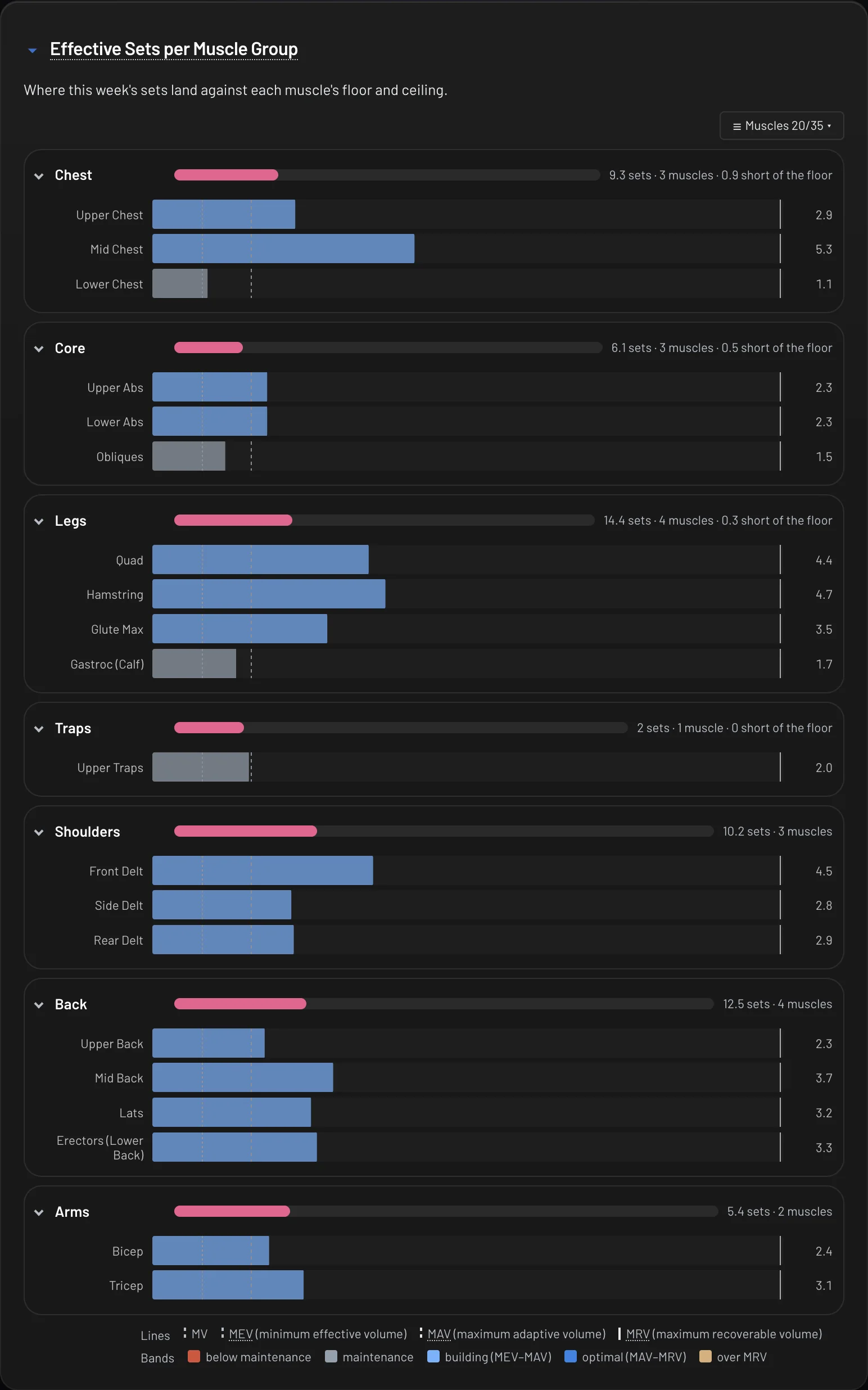
Effective sets per muscle
Every working set is weighted by the exercise, the load, the reps, how close to failure you went and the rest. It is then credited to every muscle it works, the helpers as well as the main mover, so indirect work is counted, not lost. Each muscle is summed against your own floor and ceiling.
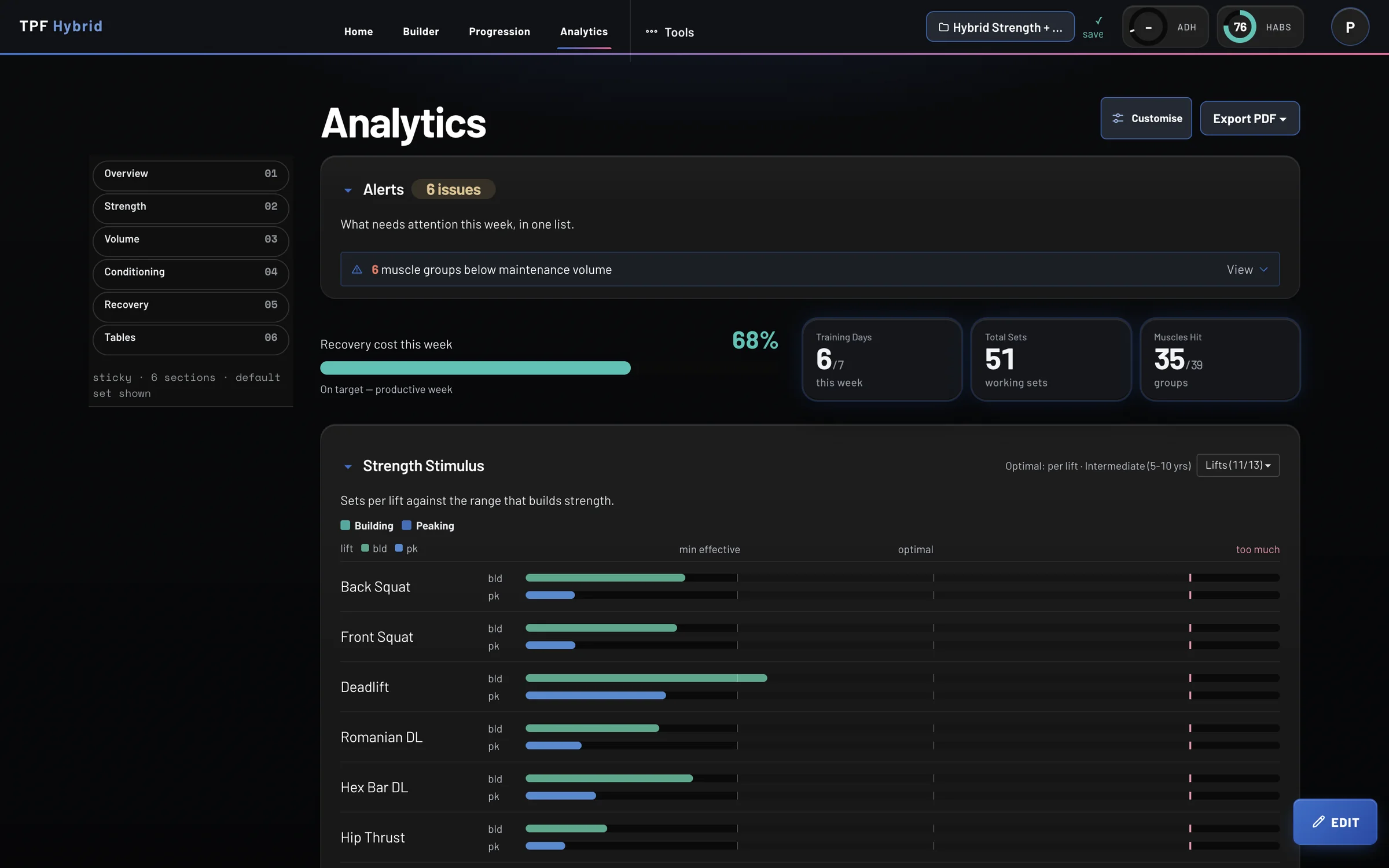
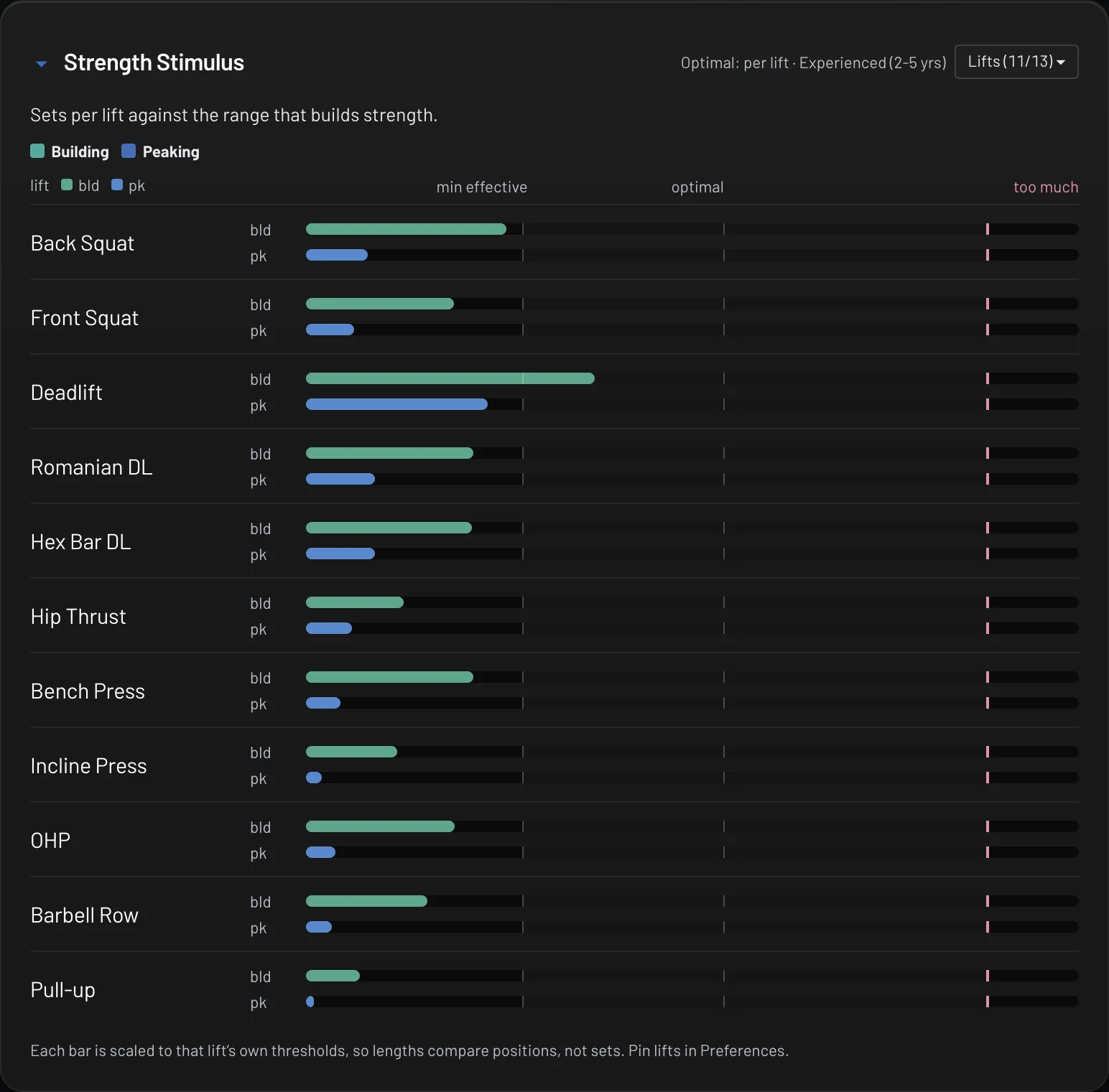
Strength stimulus per lift
Building work and peaking work for every main lift. The variations and supplementary lifts that build a lift count toward it too, each for what it carries over, so the front squats, pause work and Romanian deadlifts in your week are part of the picture. Against the minimum, the optimum and the too-much lines.
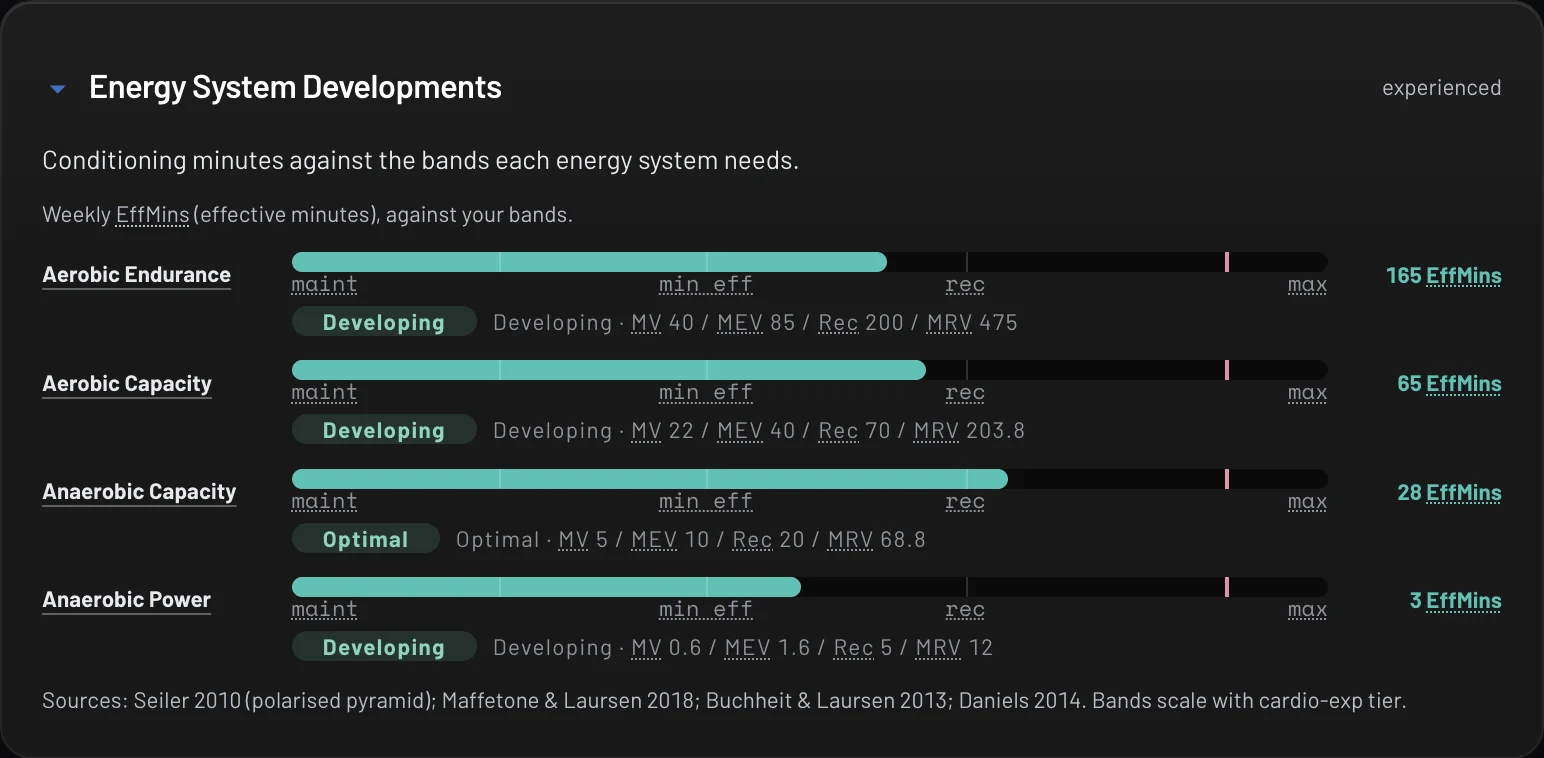
Energy-system effective minutes
Every conditioning session scored across aerobic endurance, aerobic capacity, anaerobic capacity and anaerobic power, against the band each system needs.
Zone distribution
Effective minutes by zone across the week, so a polarised plan and a threshold-heavy plan stop looking the same.
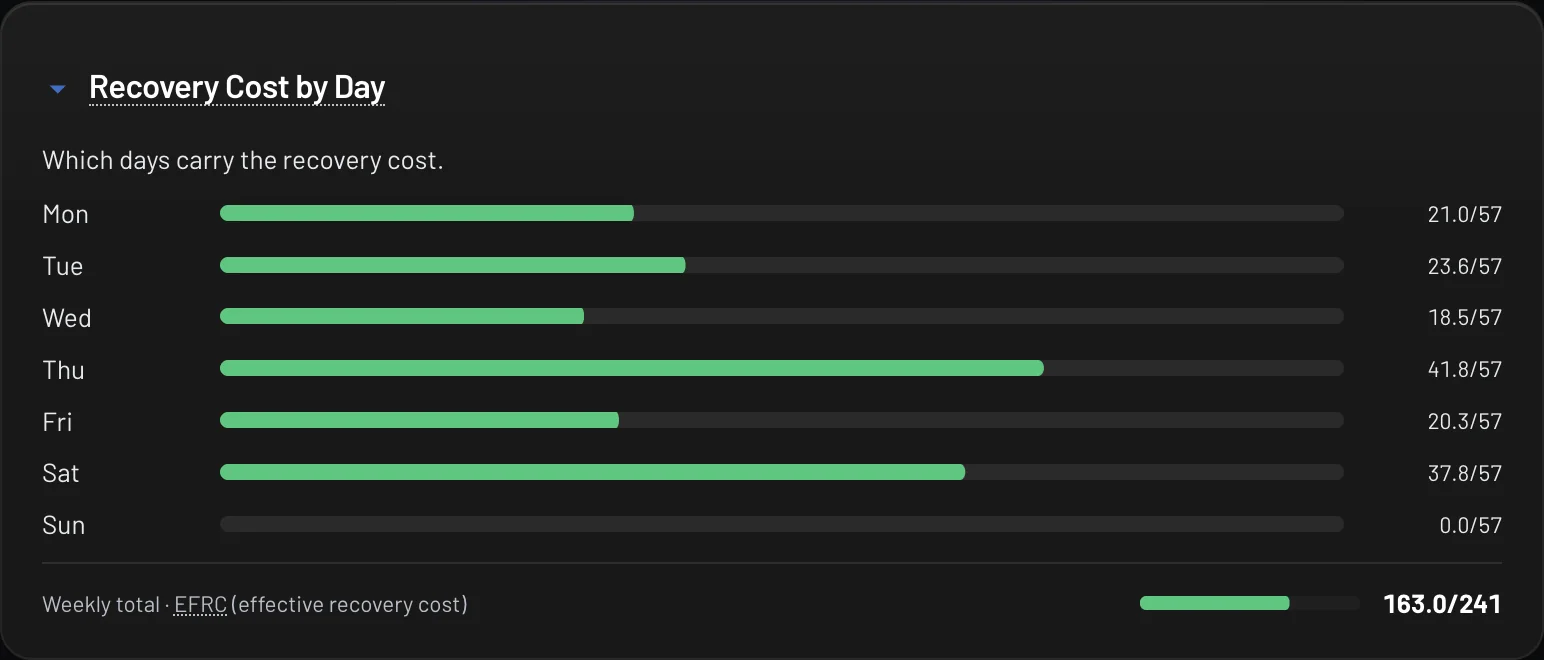
Recovery cost, by day and by week
Lifts, runs, rucks and metcons all draw on one recovery budget. Each day is costed against it, and the week against your capacity, before you train any of it.
Strength and conditioning interference
What a hard run does to the squats on the same day and the next, and what the squats do to the run, modelled rather than ignored.
Fatigue within the session, the day and the week
Fatigue changes what the next set is worth. The scoring model accounts for what came earlier in the session, earlier in the same day and earlier in the week, across lifting and conditioning alike, so each session is scored on the body you bring to it. Each body region recovers at its own rate.
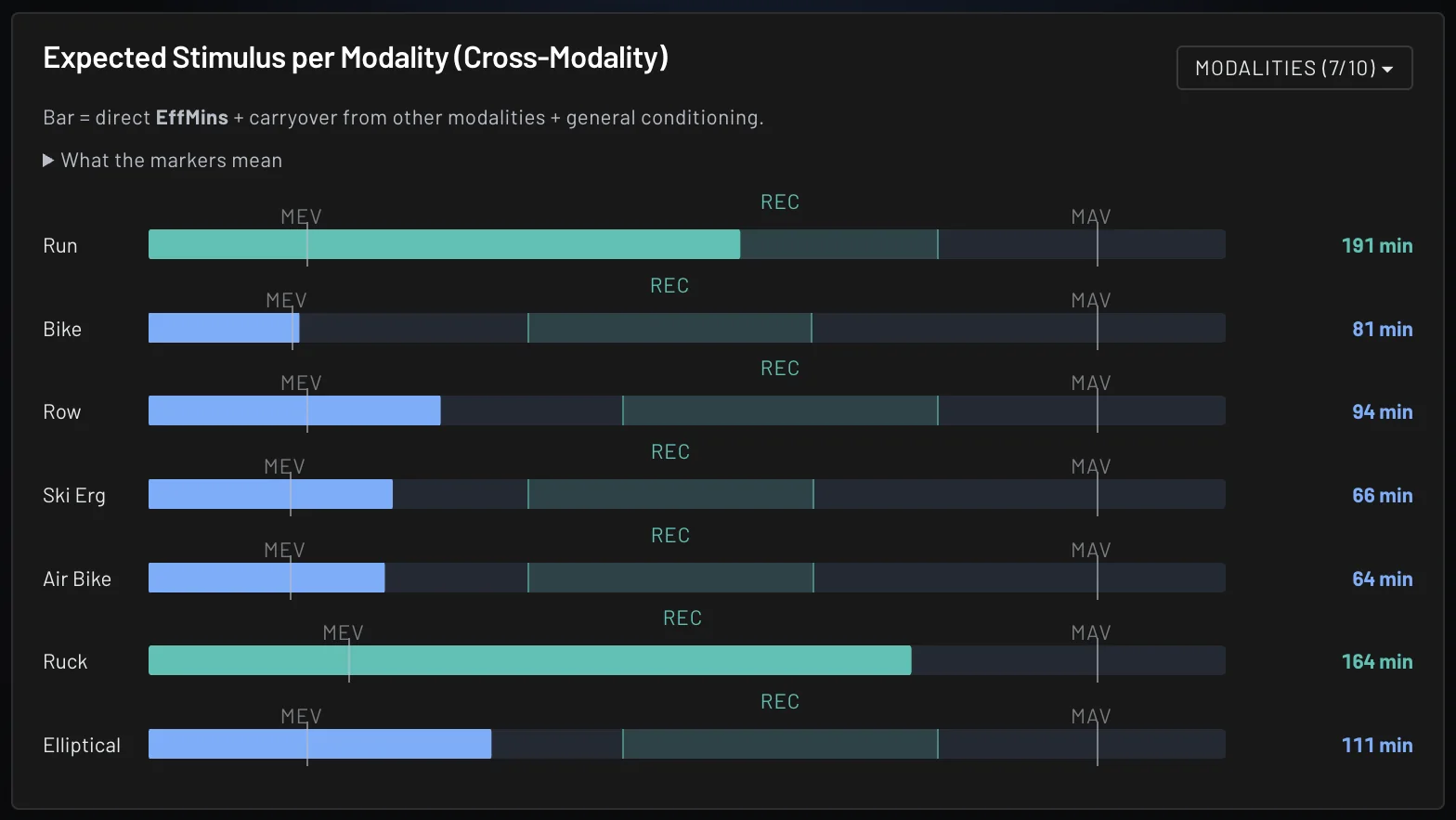
Cross-training counted, across 12 modalities
A row builds some of your running fitness, and a ride some of your rowing. Each kind of conditioning is scored for its own minutes plus what carries over from the others, each against its own band.
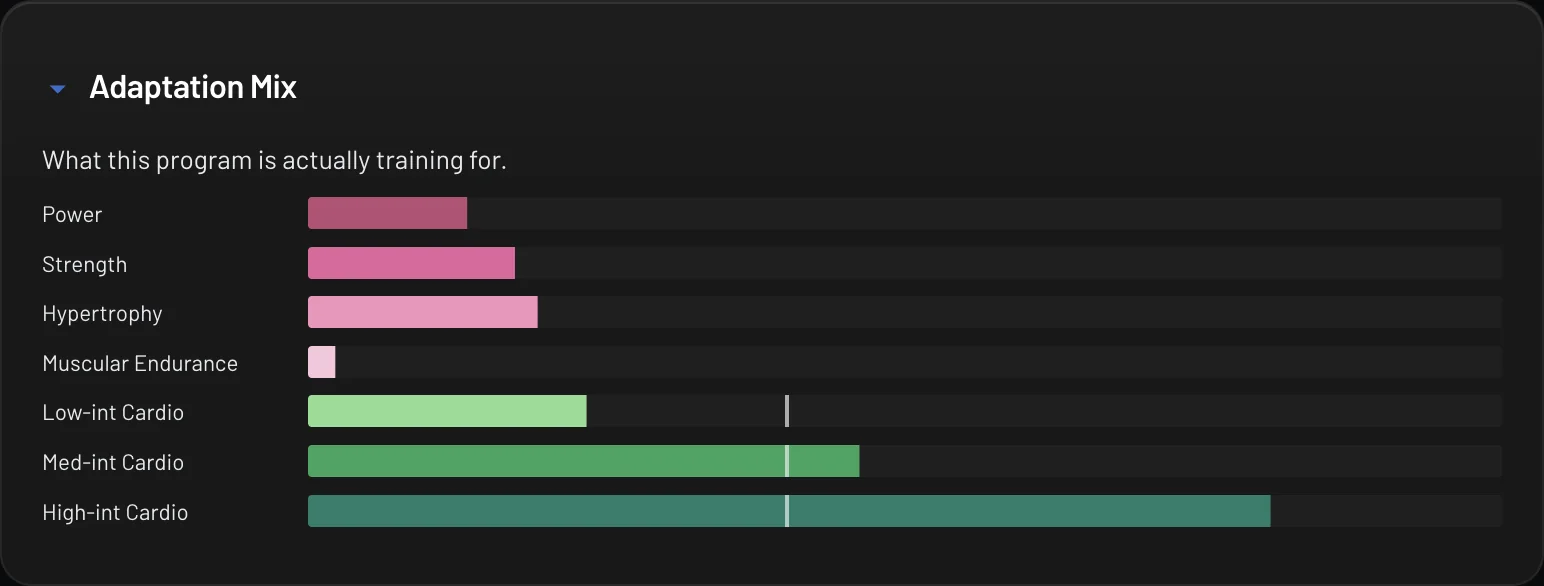
Adaptation mix
Power, strength, hypertrophy, muscular endurance and the three conditioning intensities, side by side for the whole week.
Estimated 1RM trends
Every main lift’s estimated one-rep max, tracked across blocks, so a stall shows while there is time to change the plan.
Load-change ratio
This week’s load against your recent average, across every modality.
Program Check and plan-drift alerts
Set the goal and the plan is checked against it. When it drifts, you are told, with the scored numbers behind the alert. No alert changes your plan; you decide.
How each number is worked out, and what TPF does not claim: the methodology page.