Lifting and conditioning in one programme
Build your whole programme in one place: the heavy days, the long run, the intervals, the ruck, the metcon. Everything you add is scored as you add it.
Everything here is on Premium and up, except custom exercises (Pro and up).
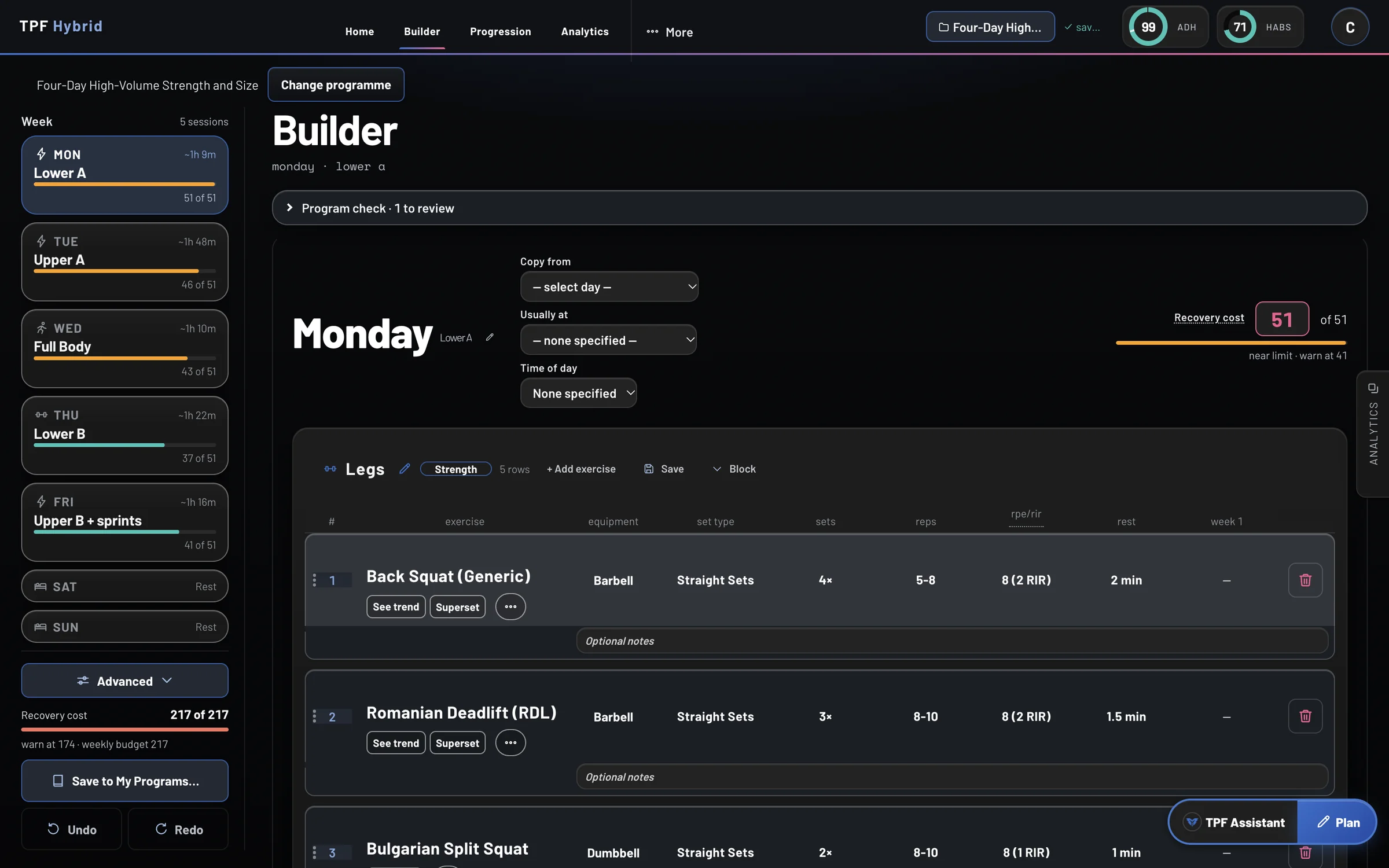
The programme builder
Weekly or fortnightly cycles, block lengths with automatic deload weeks, and each day’s recovery cost in the header before you commit to it. Reorder exercises by dragging on a desktop or holding on a phone.
91 templates
74 full programmes and 17 drop-in blocks: strength, hypertrophy, conditioning, hybrid, Hyrox and CrossFit-style, and selection prep. Filter by goal, kit, difficulty and days a week. A head start, not the headline.
Prescribed intensity
Every lift carries a percentage of your 1RM and every piece of conditioning a target pace. No 1RM or pace on file yet? It is suggested from the rep range and reps in reserve.
Progression
Next week’s numbers are set from this week’s, block by block, with the deload called when it is due. The detail, and how you see it working, is under Progression.
Your own volume targets
Set the floor and the ceiling per muscle, or let them follow your goal.
Custom exercises
Add your own exercises and set the factor weights that decide how they score.
Pro and up
12 conditioning modalities
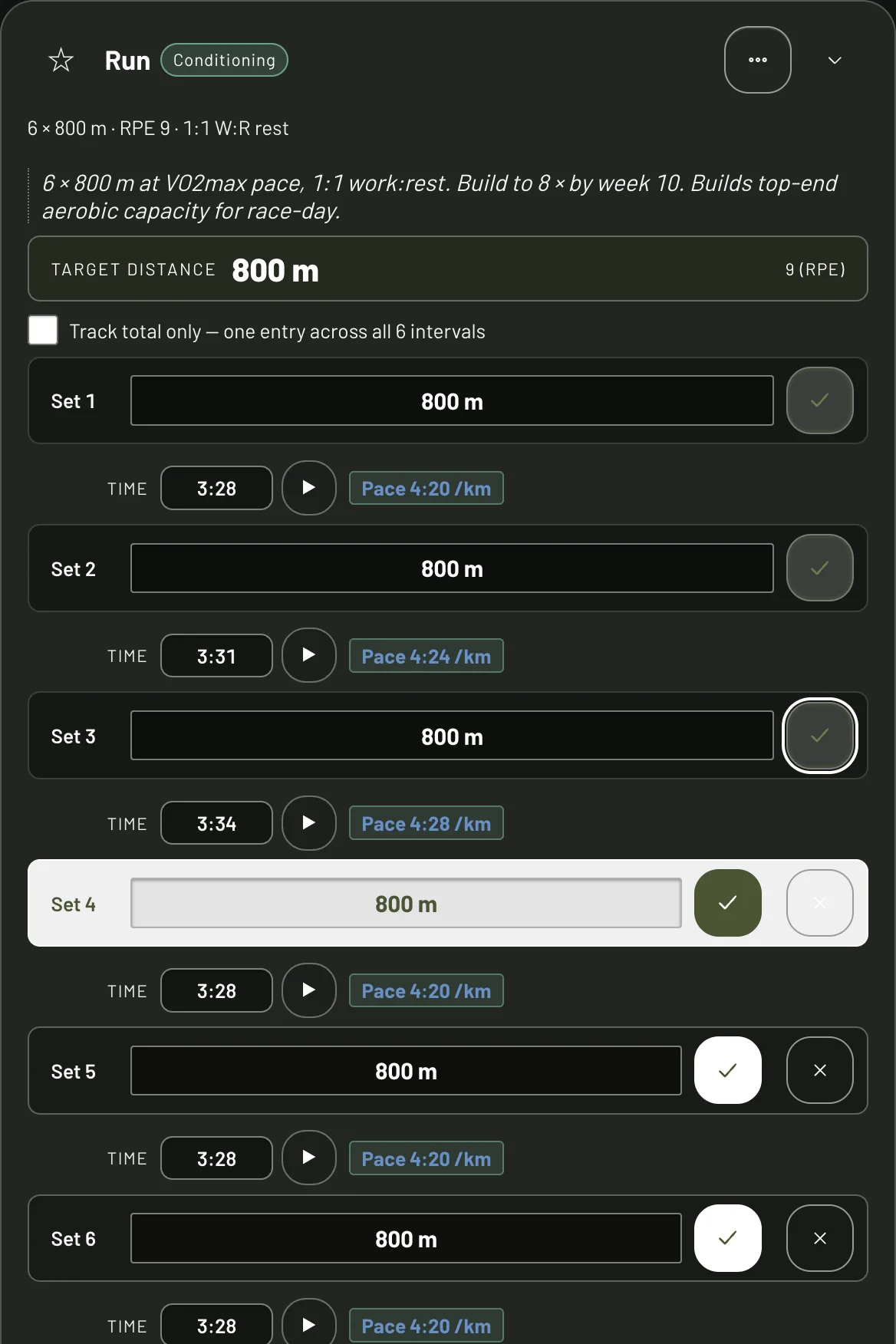
Outdoor and treadmill running, rowing, indoor and outdoor cycling, SkiErg, stair climber, air bike, swimming, rucking, sled and elliptical, each scored for what it trains.
Interval builder
Work and rest segments by time or distance, an effort for each, and a pace per kilometre, with presets for the common protocols.
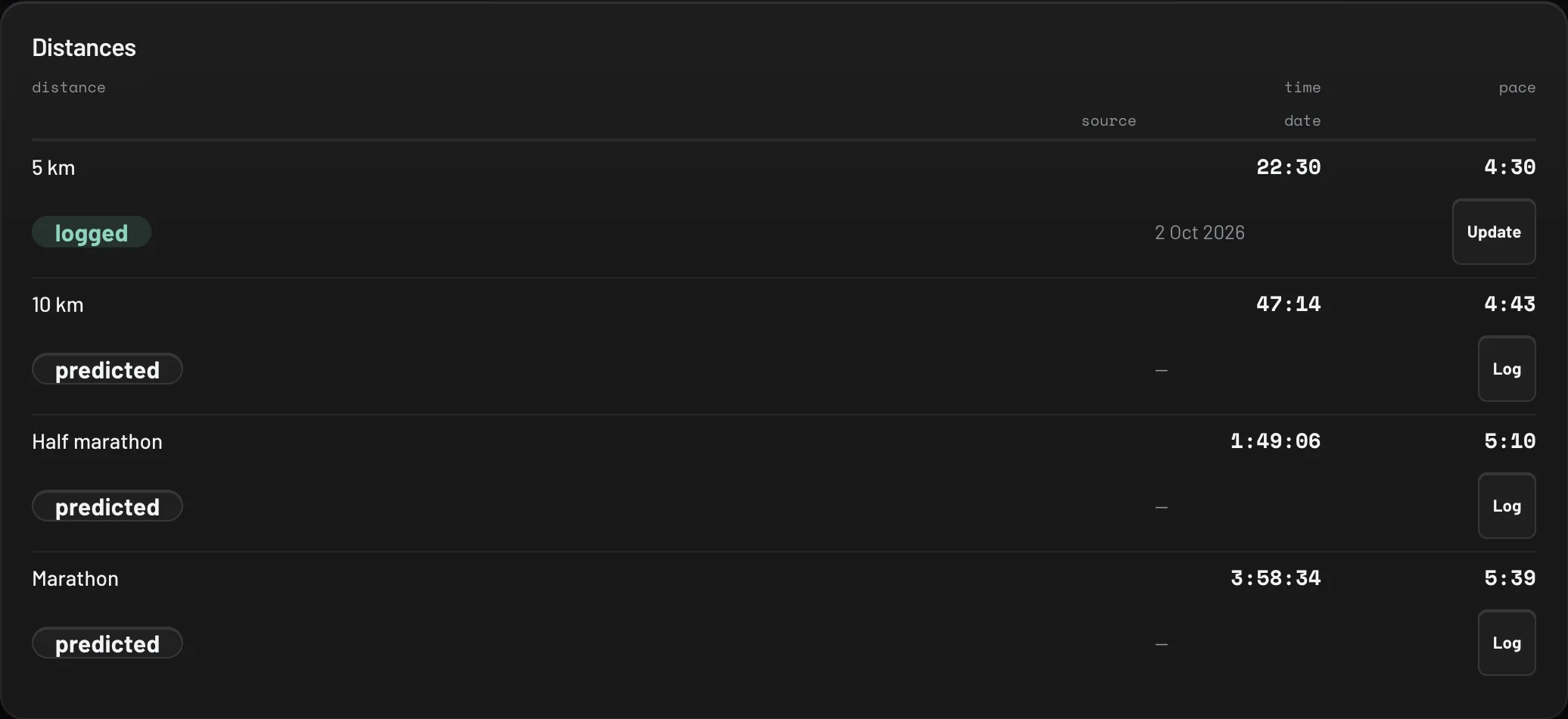
Race paces from one time trial
Log one effort and get target paces for every distance: Daniels VDOT for running, Riegel for rowing, cycling, swimming and rucking. Race times are also estimated from completed intervals.
Rucking
Target pace from load, gradient and terrain (Pandolf), ruck pace zones, and a strength floor so the ruck does not quietly outrun the legs.
How each week builds on the last, and how you see it working: progression and adherence.
What a lifting app and a running app can’t show you.
Two apps each see half the week. One plan sees all of it, scored on one model before you train it.
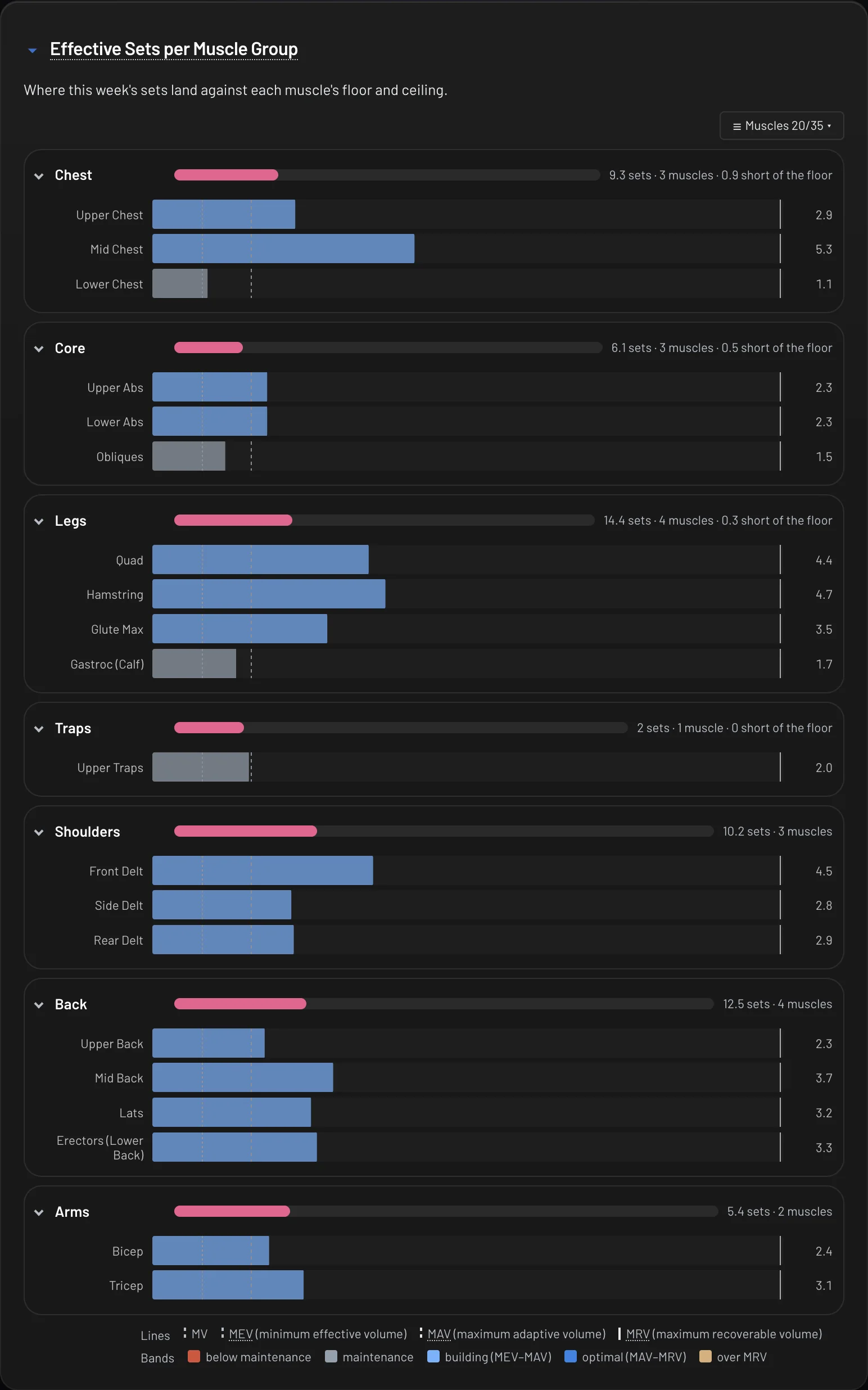
Your lifting, scored per muscle
A logbook adds up reps. It can’t tell you that chest got enough this week and shoulders got too much. Every set is counted against each muscle’s own floor and ceiling, so you see which one needs a set and which one needs one fewer.
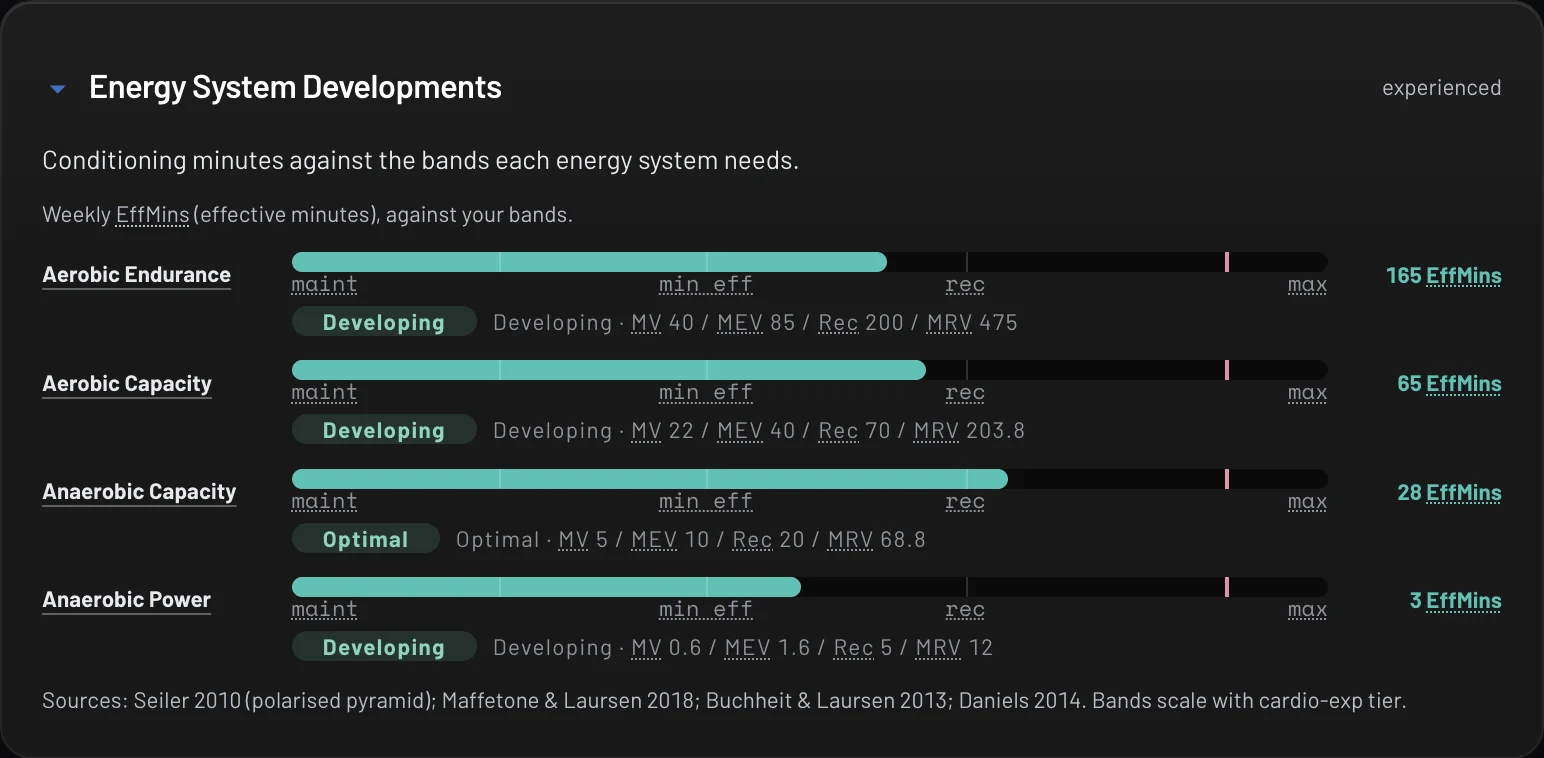
Your conditioning, scored by energy system
Forty minutes on the erg can be easy aerobic work or hard intervals, and a running app logs both as forty minutes. Each session is split across the energy systems it trains, against the band each one needs, so the gap shows while there is time to fill it.
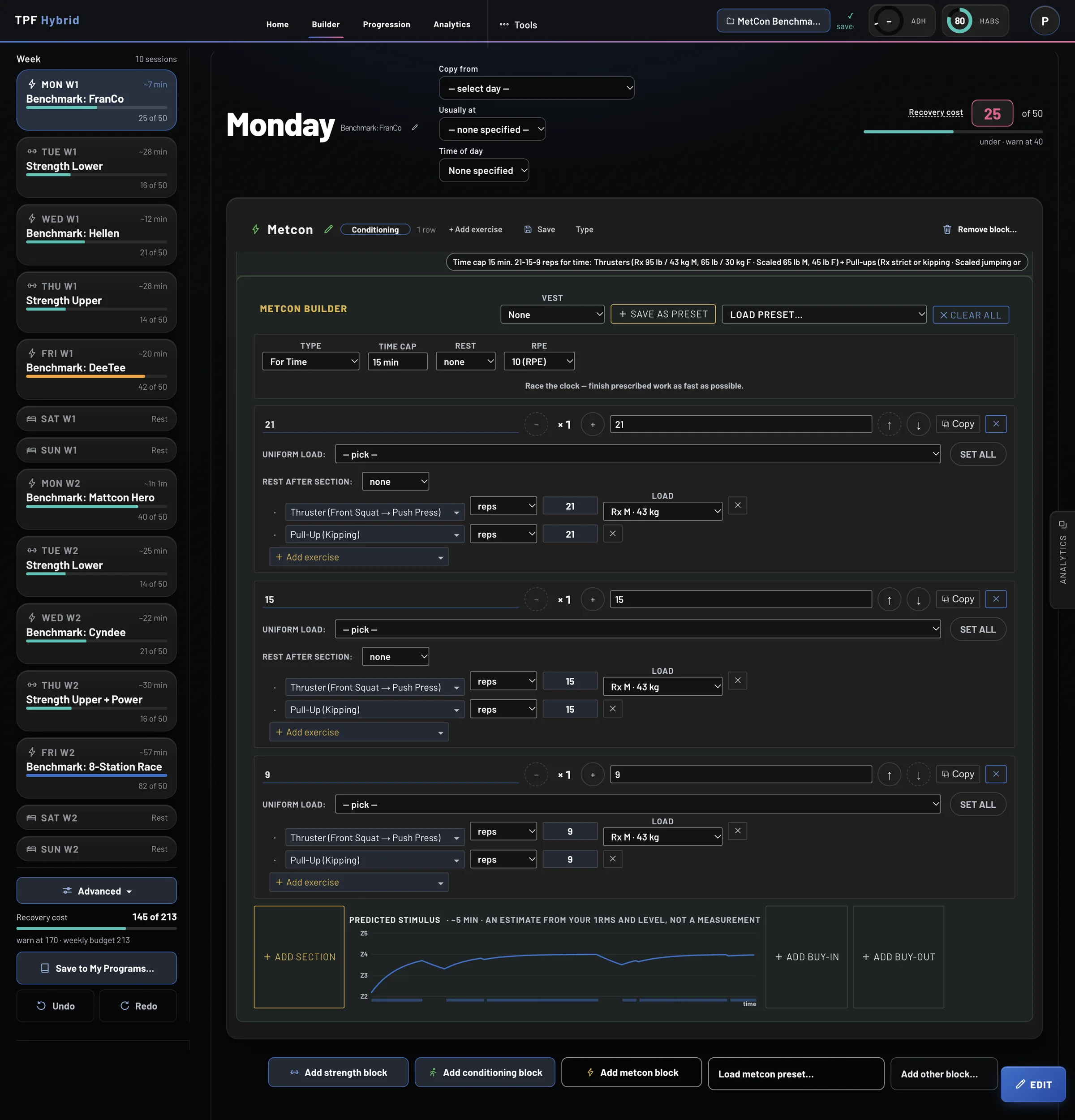
Metcons scored, not just timed
A time tells you how fast you went, not what the workout trained. Each metcon is scored for the muscles and systems it hits, like any other session, so it counts towards the week instead of sitting outside it.
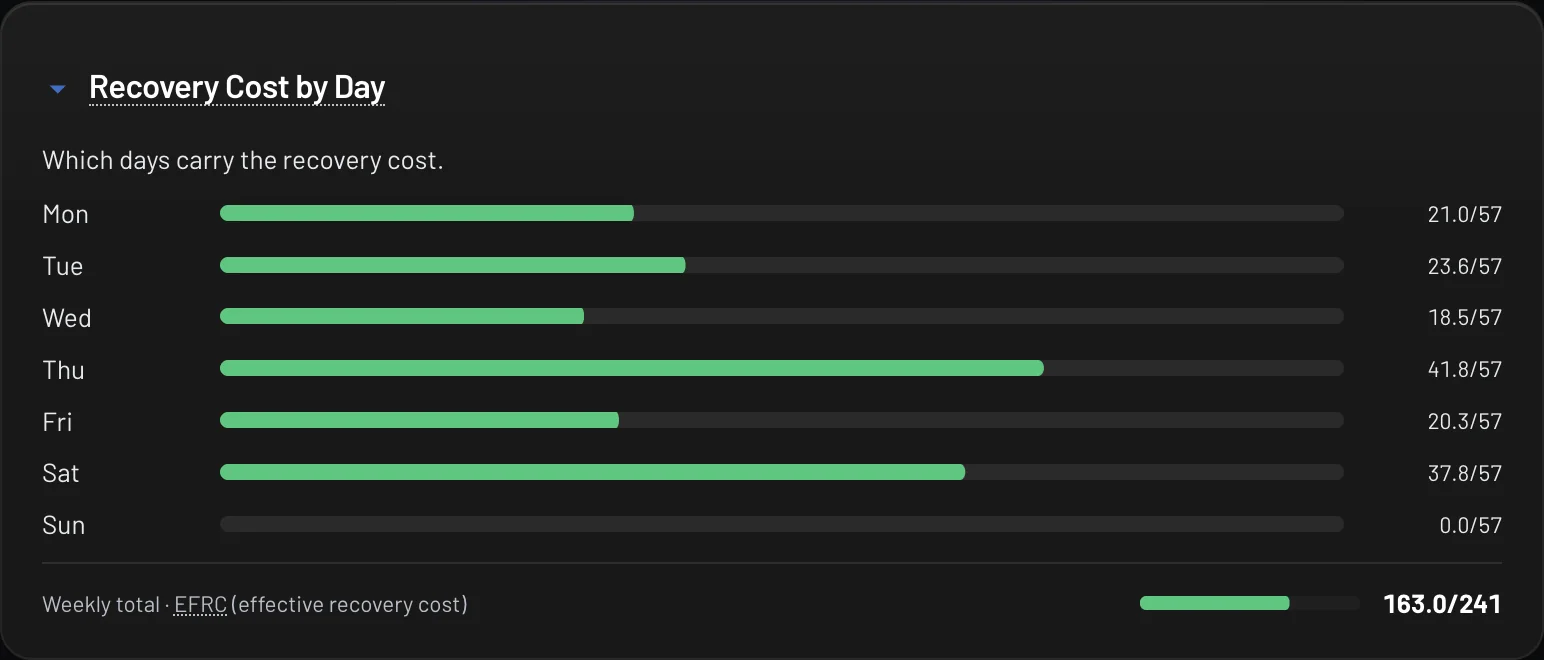
One recovery budget for the whole week
Monday’s squats and Tuesday’s intervals draw on the same recovery. With both on one budget you can see the day that costs too much, and move a session before it takes the next lift with it.
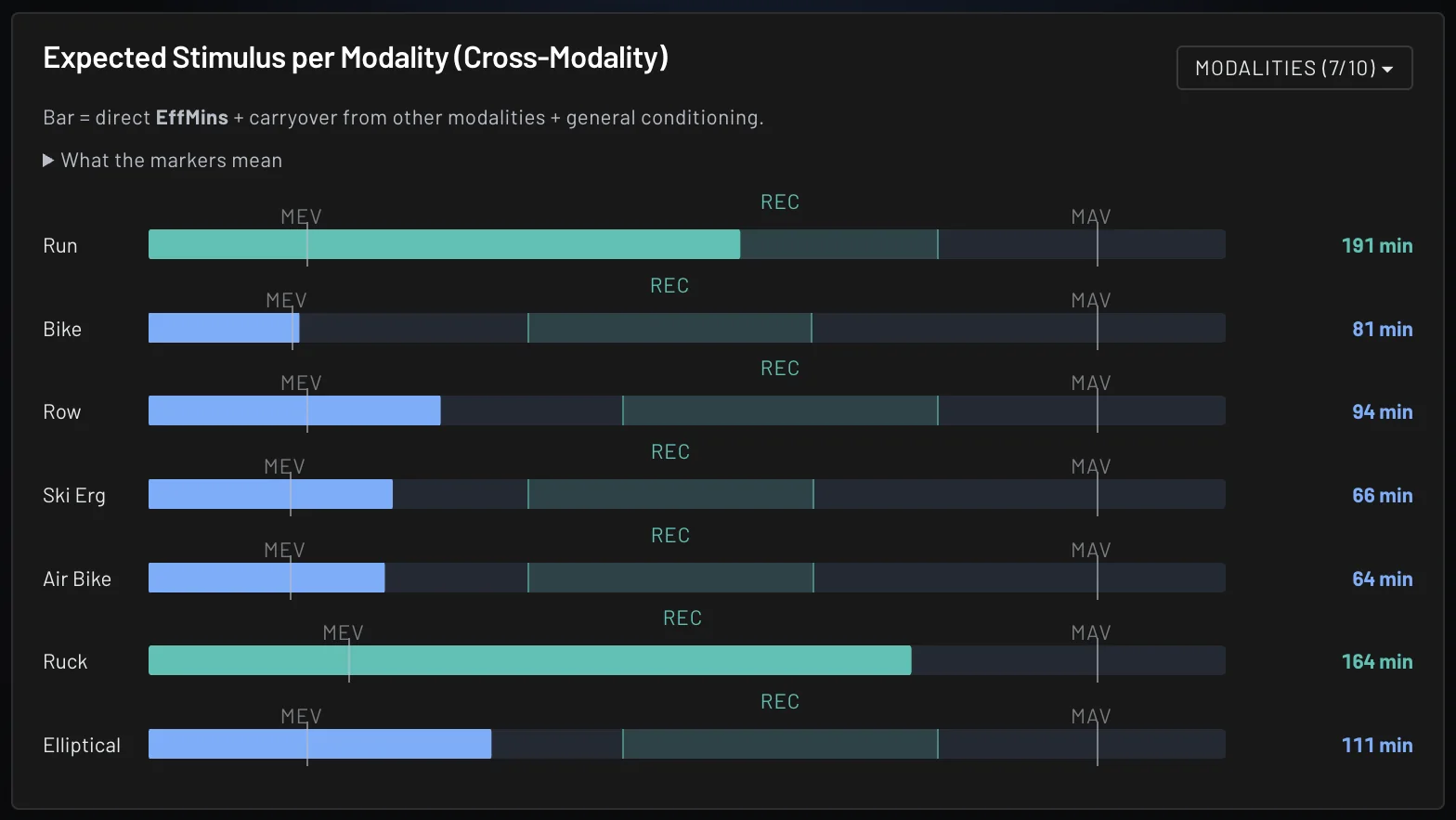
Every modality on one scale
Running, rowing, the ski erg, the bike and the ruck all count towards the same goal, including what each one carries over to the others. Swap one for another and you can see what changes.
What the week is building, as a whole
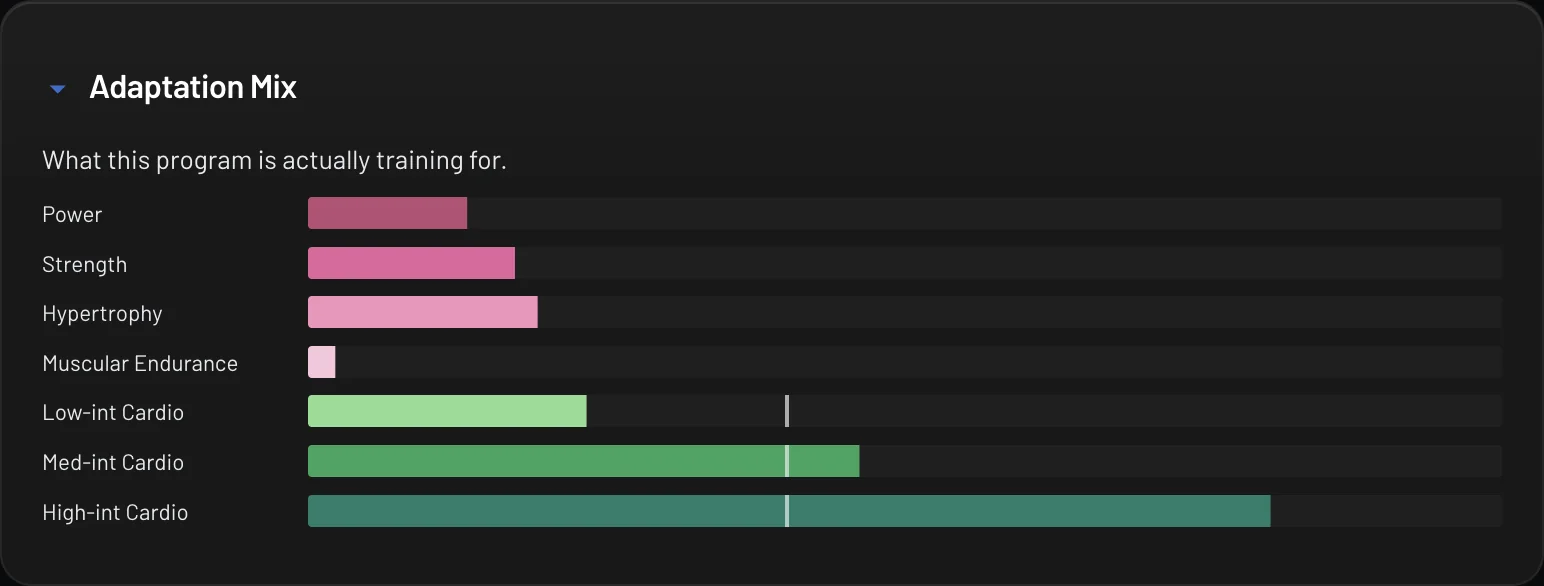
Lifting and conditioning in the same week can work against each other. The adaptation mix shows what the whole week builds, from power and strength to the three cardio intensities, so you can see when one side is crowding out the other.
Every weighting behind these scores traces to published research, listed on the methodology page.