Progressive overload, planned. Adherence, measured.
Three things make you better. Progressive overload: asking a little more of your body over time. Adherence: doing what the programme asks, week after week. Hard work: doing each set as hard as the programme says. Progressive overload and adherence matter most. TPF sets the overload for you. For adherence, the most effective programme is the one you finish, so the AI changes yours when your life changes and the adherence score shows how closely you follow it. Your estimated maxes and race times, charted from what you log, show whether the work is paying off.
Everything here is on every plan: Premium, Pro and Coach.
Progressive overload, set for you
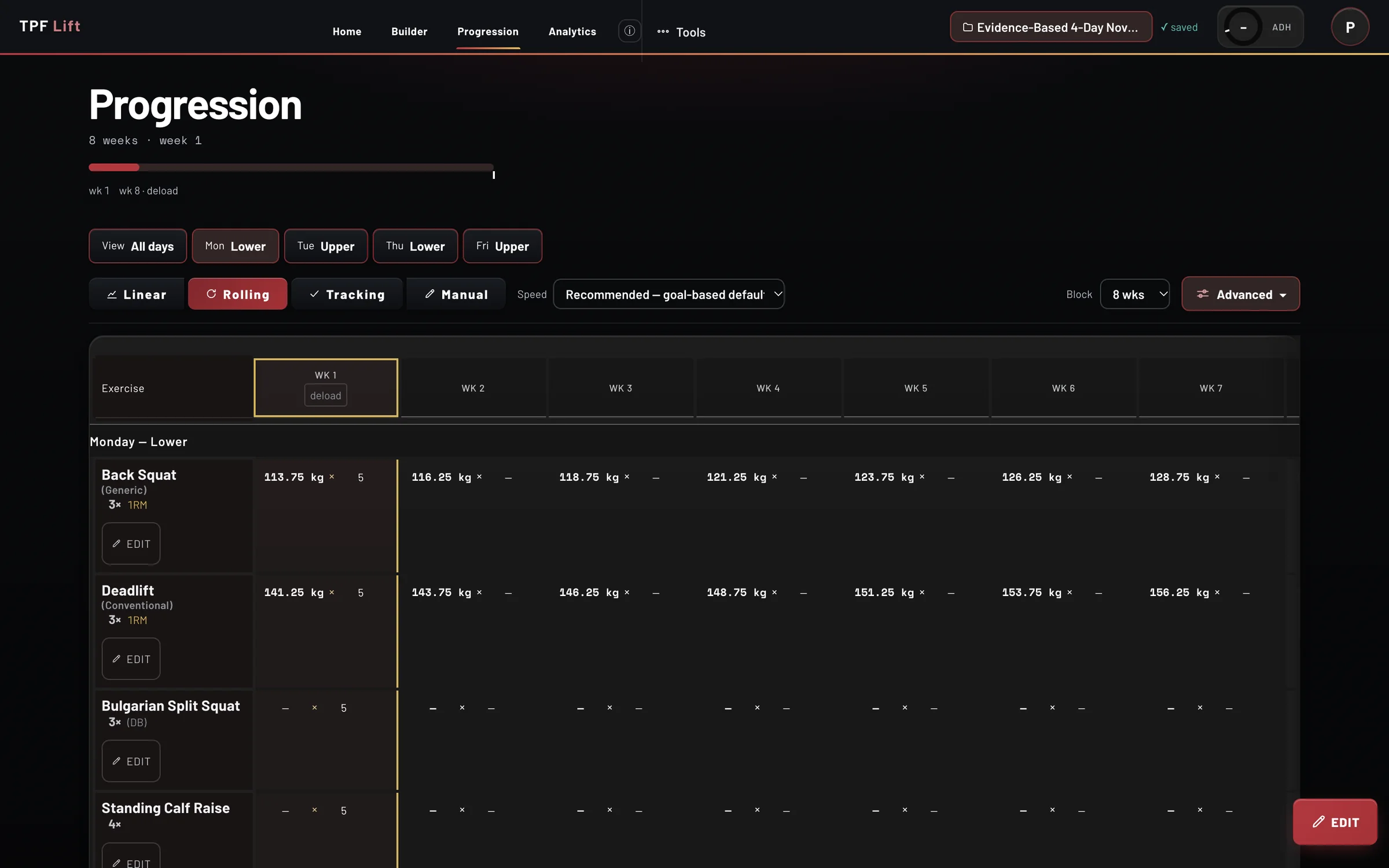
Next week’s weights, reps and paces are set from this week’s, so each week asks a little more than the last. You see the whole block, week by week, before you start it.
Choose how each lift progresses
Add weight, add reps, work to a percentage of your 1RM, or use TPF Wave: add reps to the top of the range, then add weight and start again. Or set every week by hand.
Conditioning progresses too
Runs, rows, rides and rucks build by distance, pace, number of rounds, shorter rests or longer work intervals, at a rate set for your fitness.
Programme modes and quick templates
Linear, rolling, tracking or manual, with nine quick templates for the common schemes.
Blocks and deloads
Weekly or fortnightly cycles in blocks of 4 to 16 weeks, with the deload called when it is due.
Periodisation calendar
Blocks laid across the year, with saved block plans. Premium and up on Hybrid and Operator; Pro and up on Lift.
A programme you can finish
The most effective programme is the one you finish: one that fits around your life. When your schedule changes, tell the AI: less time, a different gym, a busy week, a holiday, a missed session. It rebuilds the plan on the same recovery budget, so the weeks still get done and the progress carries on.
Adherence score
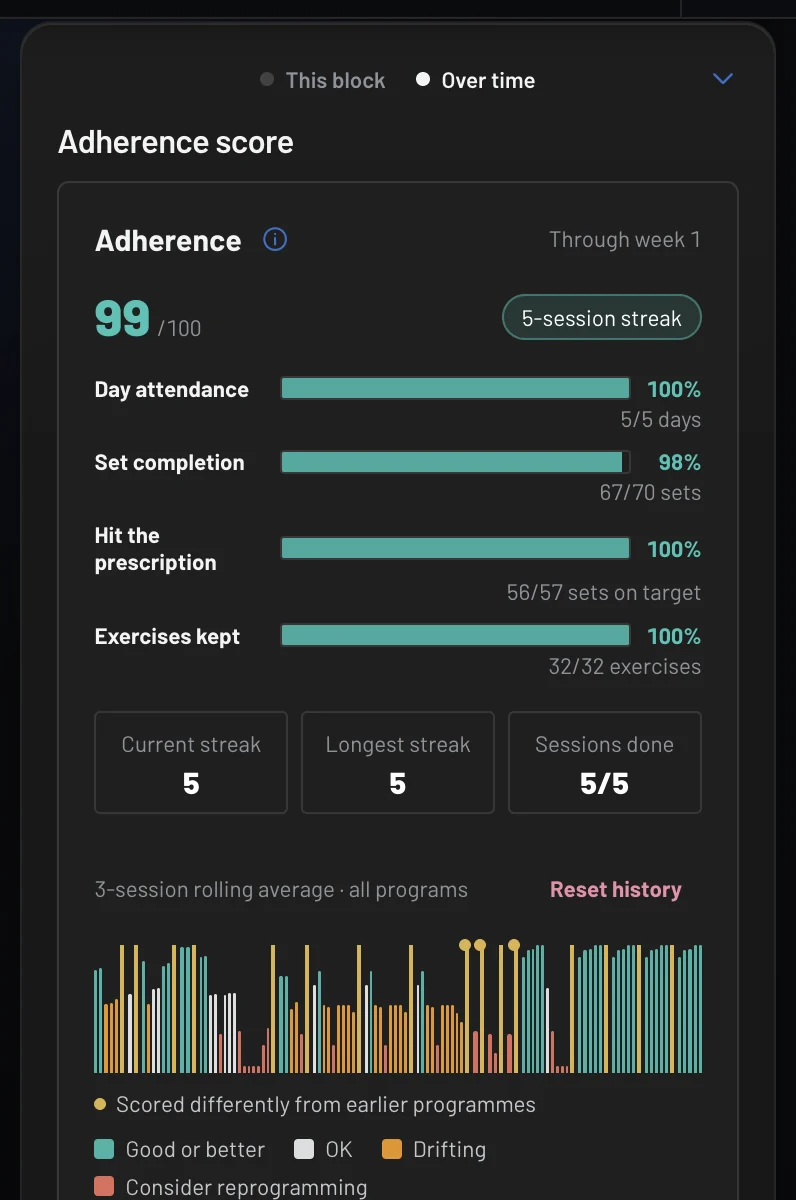
One number out of 100 for whether you did what the programme asked: the days you turned up, the sets you completed, the reps that landed on target and the exercises you kept. A plain verdict comes with it, from Perfect down to Consider reprogramming, with your streaks and a chart over time.
Seen by you, your coach and your friends
The score is on your Home screen and in your training log. Your coach sees it on their roster, and friends can be ranked on it.
Hard work, counted
Every set has a target for how close to failure it should be (reps in reserve). A set done that hard counts in full in your effective sets; an easy set counts for less.
Estimated one-rep max over time
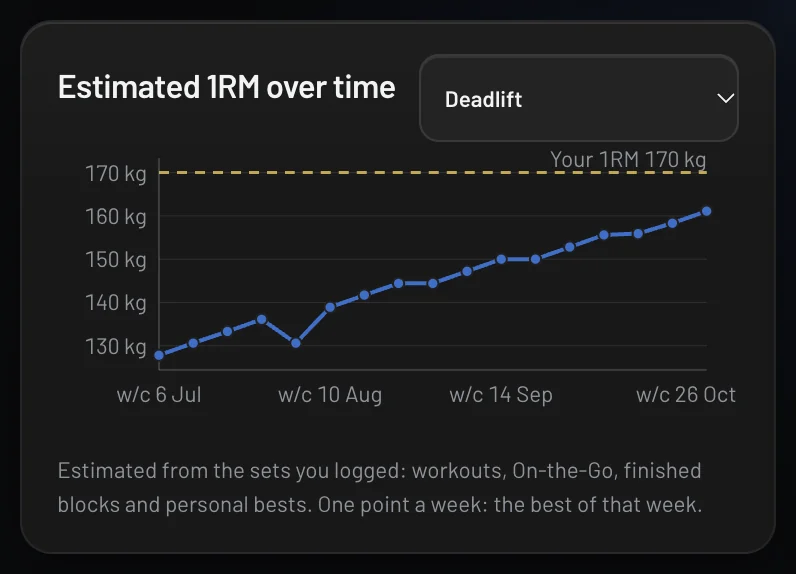
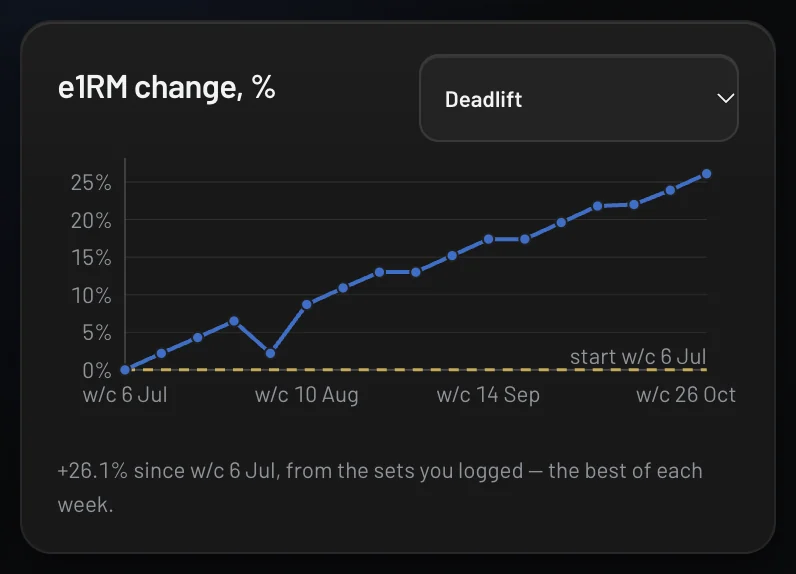
An estimated one-rep max (e1RM) for each main lift, worked out from the sets you log and charted week by week and over all time, against your tested 1RM. A stall shows while there is time to change the plan.
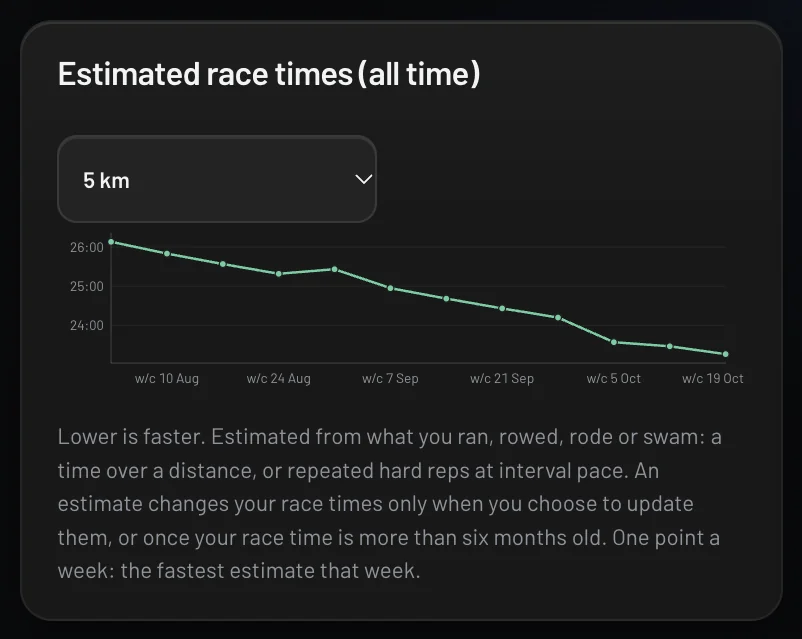
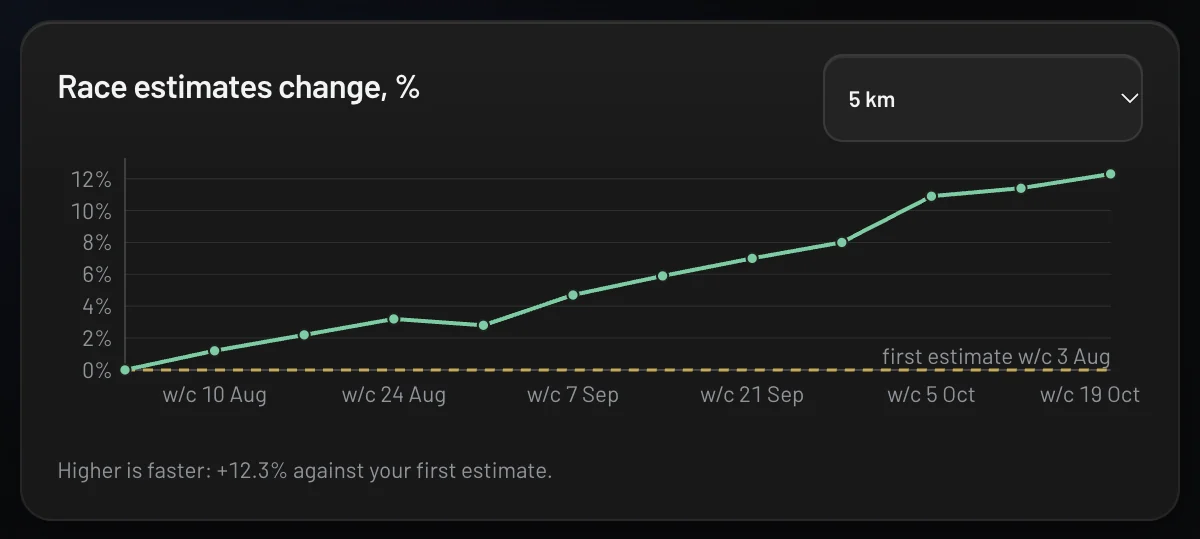
Estimated race times over time
Estimated race times (eRTs) from the runs, rows, rides and swims you log: a time over a distance, or repeated hard reps at interval pace. Charted week by week and over all time, with a flag when you set a new fastest estimate. Your race times change only when you choose to update them. On Hybrid and Operator.
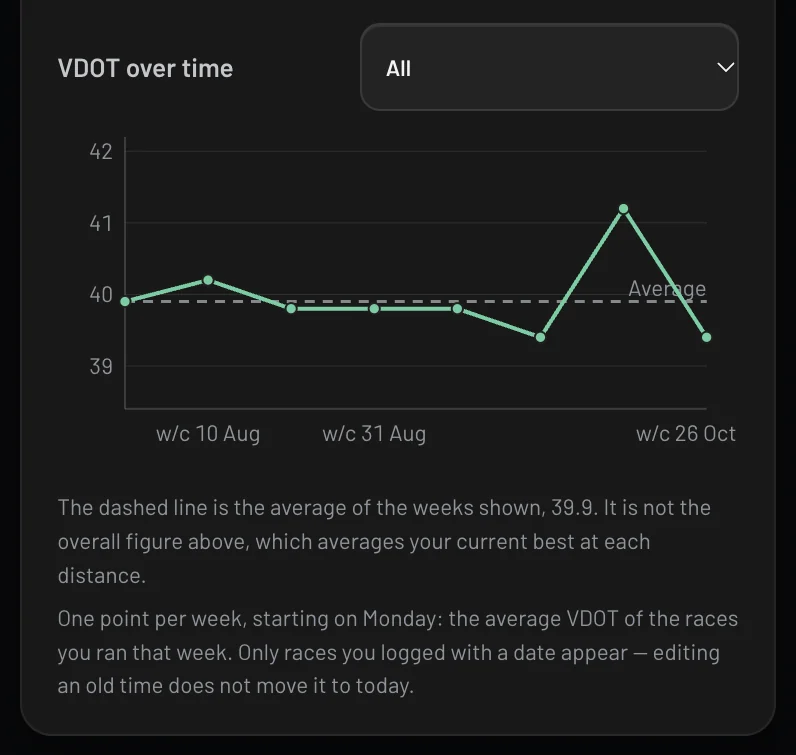
VDOT from your races
Your running fitness from the races you log, by distance and over time, so you can see where you are strong and where you are weak. On Hybrid and Operator.
What each part of the scoring measures: the methodology page.